

I had been to Kansas City twice in my life before my husband asked me if I’d like to accompany him on his trip for an ISACA leadership workshop. I declined until he told me the National WWI Museum and Memorial was located there.
A few years ago, I served on the Erie County World War One Centennial Committee and became quite moved by the stories of those who perished in the war. We raised funds to construct a memorial to Erie County residents who gave all for their country. We also wrote a book, Answering the Call: Erie County Pennsylvania in World War One and used the proceeds to fund the perpetual maintenance of the memorial. So, of course, the museum in Kansas City was of great interest to me.
The topic of World War One is also very dear to me because I had two great uncles who fought on opposite sides of the war. My paternal grandmother’s brother died for Germany, and my paternal grandfather’s brother died for the United States. “WWI: A Perspective on the Concept of ‘Enemy’” tells their story.
It would be a quick trip. We planned to leave early Thursday morning and fly home on Saturday afternoon. Because we arrived in Kansas City at around noon, Jim and I were able to spend the rest of the day roaming around the city.
Lunch in the Historic Brown and Loe Building
After checking into the Marriott Downtown, we took the free streetcar down to the historic River Market (City Market) to lunch at Brown and Loe, recommended by the hotel concierge.
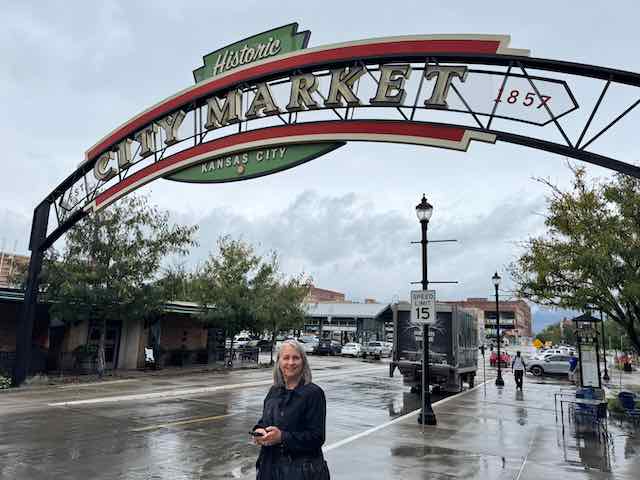
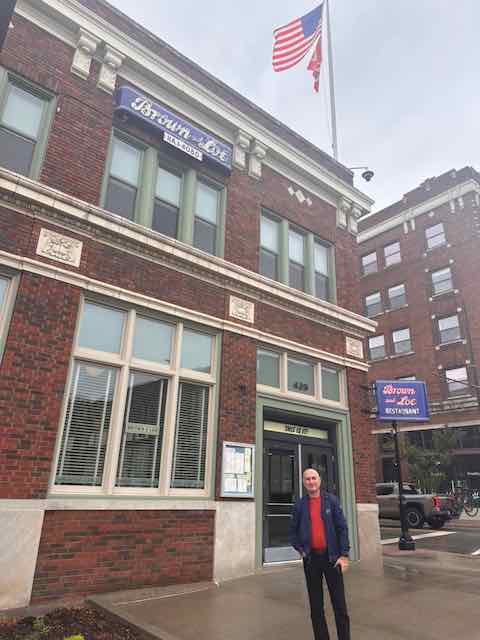
The building where the restaurant is located was originally the Merchant’s Bank building, constructed in 1920. In the mid-20th century, it operated as a produce brokerage firm with offices on the second floor. An Asian market made its home there for a while, but then it sat vacant for many years. In 2016, Brown and Loe opened as a restaurant, choosing the name to honor the produce broker that had once occupied he space. The new owners kept the marble walls and vintage banking charm.
In Kansas City, you must have barbeque, right? I had a KC Cuban sandwich, and Jim ordered the Short Rib French Dip sandwich. Mine had pulled pork, smoke brisket, BBQ aioli, pickles, Swiss, and mustard on a hoagie bun. It was rather plain and dry. Jim seemed to like his though. I enjoyed my fruity drink and Jim enjoyed his beer.
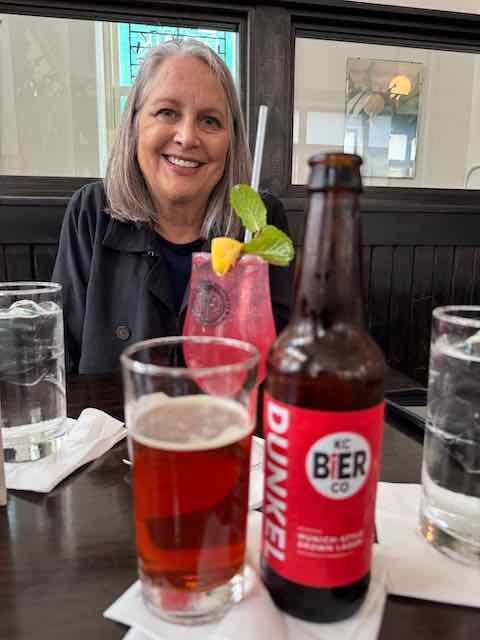
The atmosphere of Brown and Loe was pleasant, although it was rather drafty where we sat. Our server, Rick, offered to reseat us, but the alternative table didn’t seem much better. He was very attentive, pleasant, and gave us suggestions on what to do in the area.
After lunch, we took the streetcar up to the World War One museum so I would feel more comfortable the next day on my own. For dinner that evening, we ate at the hotel and had ribs. They were great, but we were still a bit full from lunch, so we didn’t even finish our meals.
Ann Takes the Streetcar All by Herself!
It was a bit difficult for us to believe that the Kansas City streetcar was free, but it was! I found it easy to navigate (it basically goes in the six-straight line), and I’m very glad I didn’t spend money on Uber to get where I wanted to go.
Of course, like many cities, Kansas City had a streetcar system in the early days, but the tracks were torn up to make way for the automobile. Then in 2016, a new streetcar system was born. It is funded by the city’s transportation development district. The streetcars arrive about every 12 minutes, and each stop has a digital display with the number of minutes until the next car’s arrival. It listed two times the day I was there, so I assume that means two streetcars were running.
Each stop also features a complete map of the route. Our server at Brown and Loe told us he lives in the Plaza area (at the extreme south end) and takes the free streetcar to work (far north end) every day. The cars are immaculate inside and carry a diverse mix of travelers from tourists to locals. There is plenty of seating, including for seniors, disabled persons, bicycles, and strollers. The only animals allowed are service dogs.
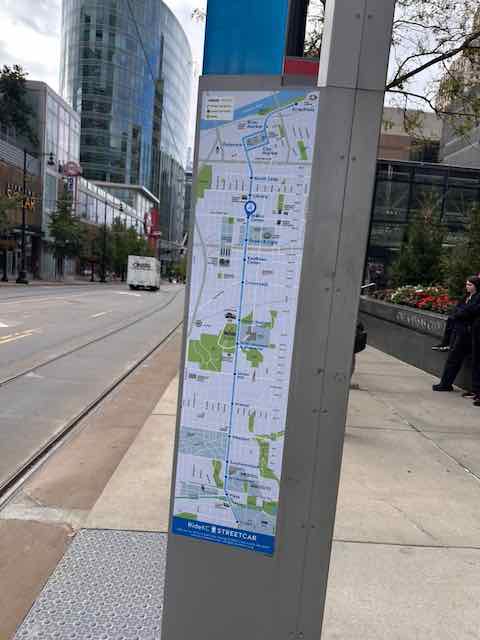
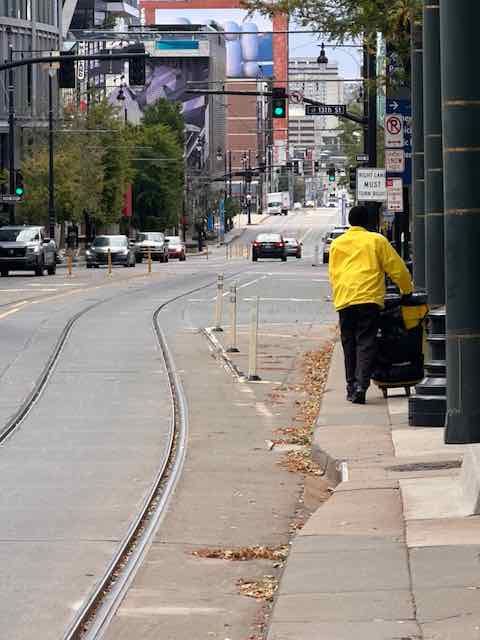
I was apprehensive about the streetcar at first and wanted to Uber everywhere, but it was so easy, I took the streetcar many times while we were in Kansas City. Everywhere I wanted to go was on the route, so I probably would have taken an Uber if I had to stray from it very far, although there seems to be a reliable bus system, too.
THE NATIONAL WWI MUSEUM AND MEMORIAL
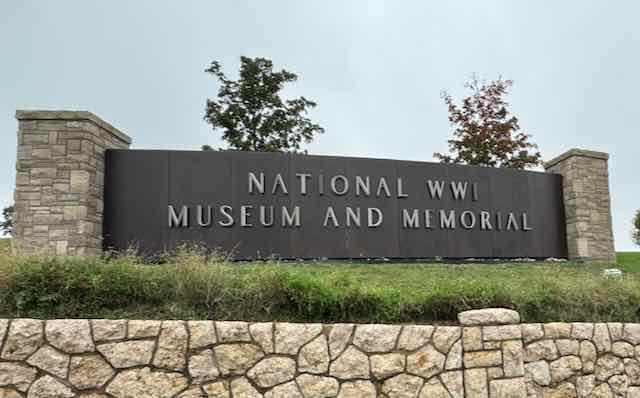
Honestly, I could have spent two days at the National WWI Museum and Memorial. I arrived at a little after 10:00 a.m. and left at around 2:00 p.m. I only left because I had wanted to see a few other things in Kansas City.
I purchased my tickets online for the museum, the Paris at War Exhibit, and the Liberty Memorial Tower all together. The pricing is very reasonable.
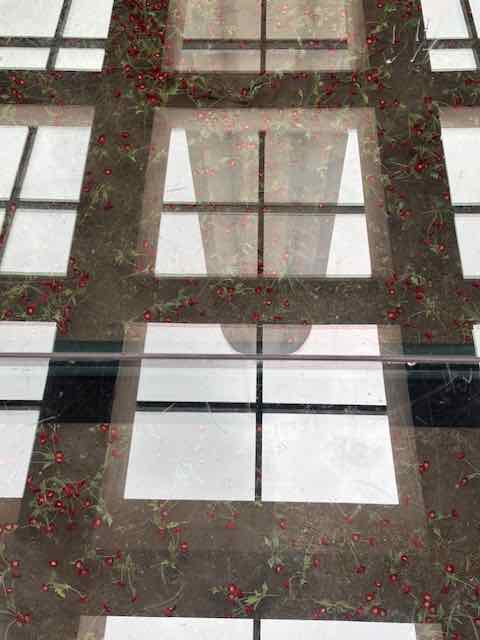
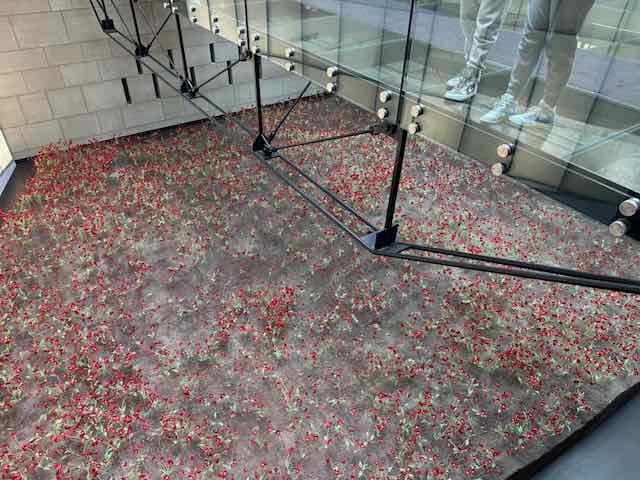
When you enter the museum, you walk across the Paul Sunderland Glass Bridge to reach the main gallery. Paul Sunderland was a World War I veteran and the oldest living WWI veteran in Kansas City at the time of his death at the age of 107 in 2004. His family foundation has provided multi-million dollar grants for updates, renovations, and improvements to the museum.
The Poppies
Under the glass bridge is a field of 9,000 poppies. They represent “No Man’s Land”, and each poppy represents 1,000 combatant deaths during World War I. The poppy is the universal remembrance for World War One, inspired by the flowers that grew over the graves of fallen soldiers, immortalized in the poem “In Flanders Fields.”
In Flanders Fields
By John McCrae
In Flanders fields the poppies blow
Between the crosses, row on row,
That mark our place; and in the sky
The larks, still bravely singing, fly
Scarce heard amid the guns below.
We are the Dead. Short days ago
We lived, felt dawn, saw sunset glow,
Loved and were loved, and now we lie
In Flanders fields.
Take up our quarrel with the foe:
To you from failing hands we throw
The torch; be yours to hold it high.
If ye break faith with us who die
We shall not sleep, though poppies grow
In Flanders fields.
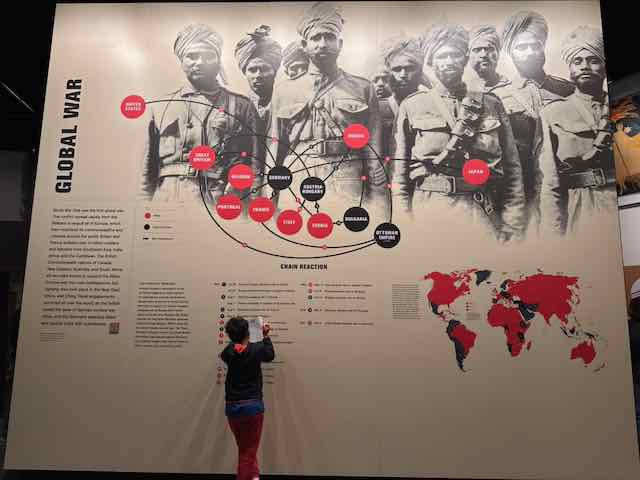
Visitors are encouraged to start their experience with an introductory film and then make their way counterclockwise through the galleries. The first half covers 1914-1917 before the United States entered the war. It gives a very detailed description on how and why the war began. It lists all the major players and how and why they were connected.
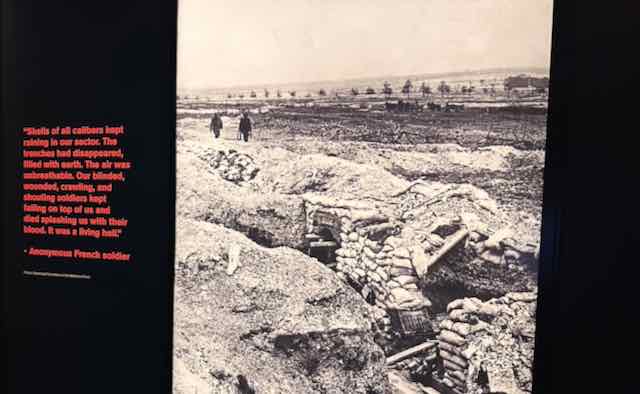
There are exhibits on the intricate trench systems, giving the visitor a good idea of the misery people experienced in them. I learned that the trenches extended over 400 miles across Belgium and France for a total of 35,000 miles of trenches. That is insane.
Live and Let Live in WWI
One particularly impactful display concerned the term, “live and let live.” It shows the human side of war, which the commanders failed to see as they moved little objects around maps.
The Western Front was a living hell of artillery barrages, machine gun bullets, and sniper fire. Quiet sectors existed, however, where units on both sides, either through exhaustion, poor leadership, or apathy, tried to avoid conflict. “Live and let live,” a phrase coined by a British war correspondent, took a variety of forms. Troops in the frontlines would sometimes refrain from firing at mealtime or on holidays. Gradually, a sense of mutual agreement would allow both sides to get through certain periods of the day without disturbance. Night patrols would spot each other in no-man’s-land and quietly move away to avoid an encounter. Commanders detested “live and let live” and took various measures to stamp it out.
I wonder how many lives were saved in this manner with those who were spared not even knowing how close they came to death.
The atmosphere in the museum is solemn, and I wished I was recording the various snippets of remarks by the visitors around me. Many were knowledgeable and shared trivia of what they knew about the war with their companions. One young boy kept trying to get his father’s attention and repeated and again, “Dad, do you know what ended the war?”
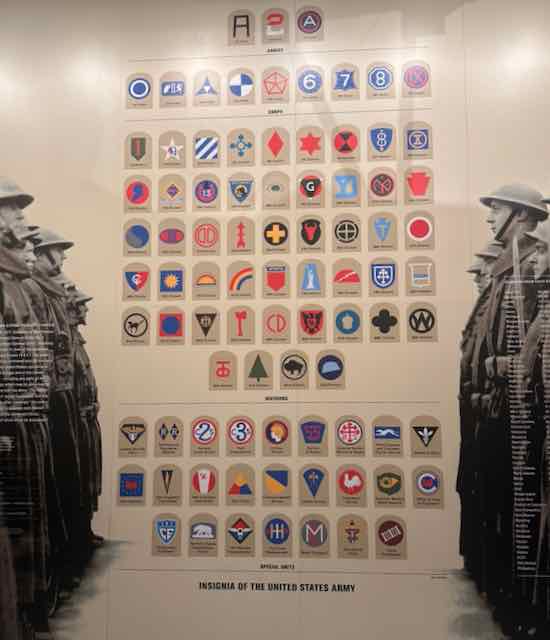
(WWI museum in Kansas City)
Censorship in WWI
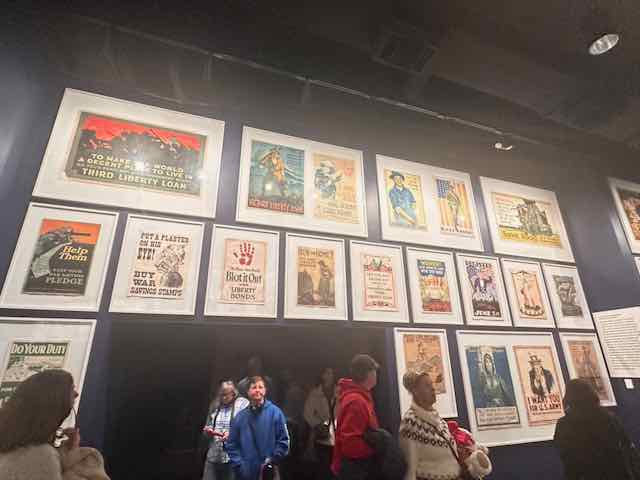
I had known that propaganda was heavy in World War One, with posters encouraging men to join up and shaming those who did not. I was not, however, aware of the level of censorship that occurred during the war. The Wilson administration dealt harshly with critics of the war. Eugene V. Debs who had run for president in 1912 was sentence to 10 years in prison for his anti-war activities. The postmaster general banned radical publications from the mail. All foreign-language publications had to submit English translations to the post office in advance of mailing. The 250,000 members of the American Protective League was permitted to spy on dissidents, radicals, and “slackers.” They detained draft evaders. Some suffragists who picketed the White House were arrested, jailed, and if they went on hunger strikes, were force fed.
Paris at War and the Liberty Memorial Tower
I elected to add the two supplements to general admission, Paris at War and the Liberty Memorial Tower. Paris at War was small, but very interesting with the feel of walking a Paris street in the middle of the war.
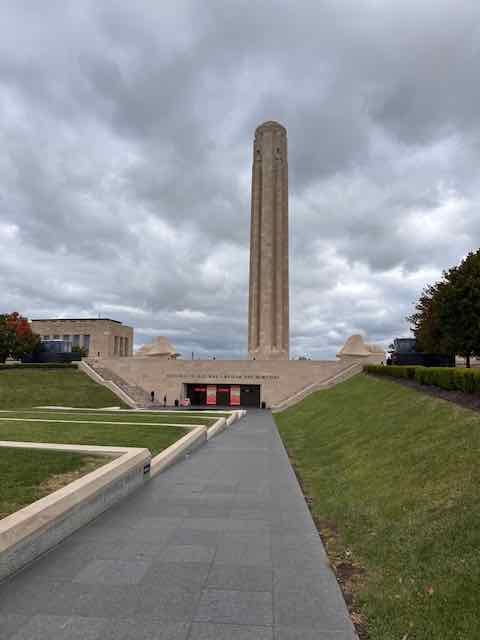
The Liberty Memorial Tower experience was quick, but worthwhile. The tower is 217 feet tall. It was dedicated in 1921 and built between 1923 and 1926. It features four carved Guadian Spirits around the top of the tower, representing Honor, Courage, Patriotism, and Sacrifice. The Sphinxes guarding the south entrance Memory (facing east toward Europe’s battlefields) and Future (facing west away from war toward peace). Over time, the Memorial deteriorated and in 1994, it was closed due to safety concerns. In 2002, it reopened when the entire campus underwent renovation.
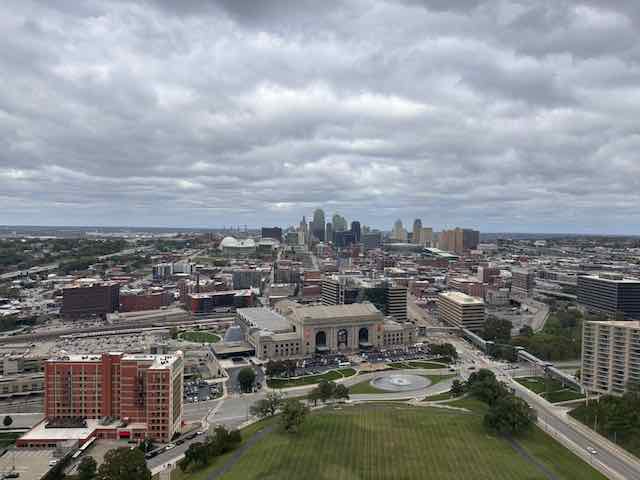
Even though the elevator looks like it must be the original, it is not and ascends quickly. When you exit, you still must climb a spiral staircase, which might be difficult for some. It was extremely windy the day I visited, and honestly, it felt like my phone was going to fly away. I took a few photos and got out of there!
Memory Hall
Be sure to visit Memory Hall if you can. It is a testament to the determination of those who founded the memorial, a recognition of how a vision can falter, and gratitude to those who valued history and the sacrifice of those who came before them and breathed new life into the memorial. On the walls of the exhibit hall were many fabric murals of various battlefield maps.
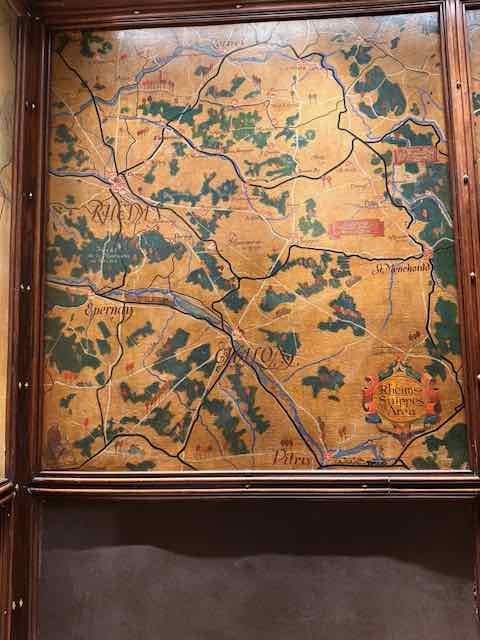
Memory Hall walks visitors through the vision from which the memorial was born. It details how a group of 40 prominent Kansas City residents formed an association that raised $2.5 million in just 10 days for a memorial to those who served in World War One. The site underwent numerous improvements over the years, but it eventually fell into disrepair. By the 1990s, the condition of the memorial had become an embarrassment to the city. In 1998, Kansas City voters passed a limited-run sales tax to support the renovation. In 2004, Congress named it the nation’s official World War One museum and the Liberty Memorial was designated a National Historic Landmark in 2006. The memorial continues expansions and improvements and it will celebrate its 100th anniversary this year.
More Exploration of Kansas City
Someone told me that the Hallmark museum is in Kansas City, so I decided to go there after the World War I museum. It’s just across the street, but the visitor’s center wasn’t very easy to find—at least for me. They don’t call it a museum, so it is on a smaller scale. Still, it provides a nice overview on the founding of the company and its evolution over the years. What would J.C. Hall think of the company having its own television channel today? Or the 1984 Hallmark purchased Binney & Smith, the manufacturer of Crayola crayons? I especially enjoyed the display of Christmas trees. They also had an old bow-making machine that would twist a bow at the touch of a button and spit it out at you as a souvenir. At the end of the tour, I went to the gift shop, which was surprisingly small and I didn’t buy a thing.
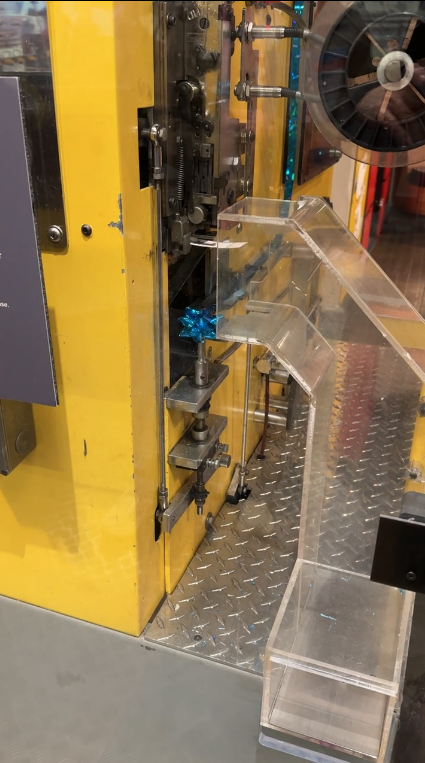
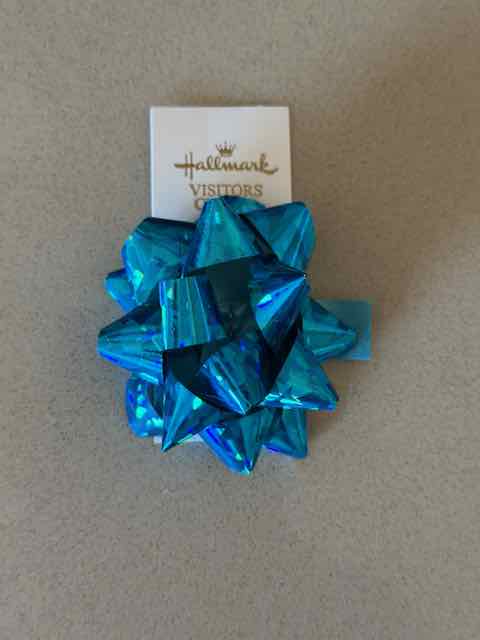
After I found my way back to the streetcar route, I traveled to Country Club Plaza, which our server, Rick, had told us about. It is an open-air mall with lots of high-end stores. Of course, when I exited the streetcar, I went the wrong way and logged a couple of thousand extra steps for the day. As I mentioned earlier, it was very windy that day, so meandering around an open-air plaza wasn’t the most pleasant experience. Soon, I was back on the streetcar and headed back to the Metro stop, where the Marriott is located.
Before I went back to the hotel, I stopped in at Cosentino’s Market and bought a few bottles of water, some tortilla chips and cheese dip, a slice of chocolate cream pie, a Milky Way bar, and a Reese’s cup for Jim. I won’t tell you how much of this I consumed in the hotel room while Jim was out at his dinner gathering!
The Final Day in Kansas City
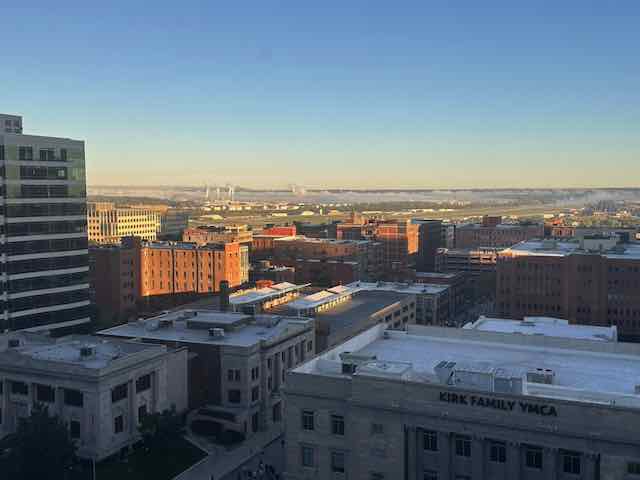
Jim had a half-day session on our final day, and I remained in the hotel room, relaxing, and preparing for this blog post. It was a very nice, quiet morning. I especially enjoyed watching the Kansas City Marathon runners from our hotel room. They went on and on and on—11,000 of them. Police held back the traffic that must have waited at least an hour to proceed. I’m sure cars turned around, but the buses didn’t have that luxury. Eventually, the crowd thinned out enough that the police would let one bus sneak through at a time.
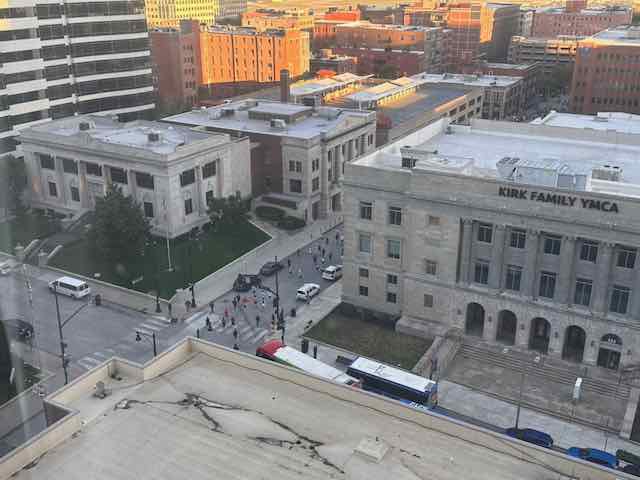
From our Marriott room (Kansas City)
When Jim returned, we caught an Uber back to the airport and had lunch at Meat Mitch Barbecue. We sat side-by-side and watched the planes taxi, takeoff, and land. Jim, of course, had a craft beer of some kind and I enjoyed a fruity drink.
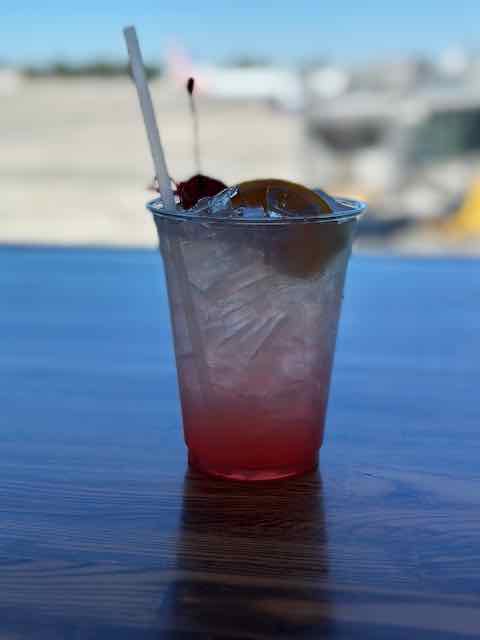
Nice way to end our stay in Kansas City
We had quite a long layover in Chicago, and American kept changing the departure gate. At one point, we were at gate located on a lower level that I swear must be what steerage travelers on ocean liners endured. We are kind of used to substandard gates locations that take us on tiny planes to Erie, PA. They’re really sort of an insult!
Overall, our flights were fine with a minimum of delays. The American staff members were largely pleasant, though, I can imagine how irritating we ignorant travelers can be—trying to stuff too-large bags in the overhead compartments, etc. I was irritated myself, and I don’t do this every day. I especially was irritated by the young men who thought they were in a bigger hurry than the rest of us and nearly knocked us down as we tried to make it into the aisle when it was our turn. . . They do that and then in the end, don’t end up any further along that the rest of us.
A Note About Today’s Hotels
Well, I remember travel before 9/11 and before Covid. Today’s young folks have no idea how things have changed. When I wrote for tech publications and attended conferences, I stayed in hotel rooms that cost much more than I ever could have afforded on my own. I specifically remember prior to 2002, thinking how was slumming it in a conference hotel that only cost $169 per night.
But I remember checking in and having a bellman asking if he could take your baggage to your room. Once there, he’d set up your back on a stand. He’d show you how to turn on the lights, etc. And then, of course, you’d give him a nice tip.
The rooms always had robes and slippers, stocked mini-bars, and they were impeccably clean. I’m talking mainly Marriott’s and Hyatt’s. On this trip, we stayed at the Kansas City Marriott Downtown and I have to say, that it is one of the nicer hotels I’ve experience in quite a while. It was very clean, which is very important to me, however, like many hotels these days, they only offer housekeeping services every other day. There were no robes, slippers, and no mini bar. Most hotels post this notice in the room, but the Marriott did not, leading me to think they were the exception. They were not and I had to call for some towel replacements.
The Kansas City Marriott Downtown is rather confusing in its layout, too. It consists of two towers, a new one and an old one that is accessed via a sky bridge. The older section, which has much more character was once the Muehlebach Hotel, where a series of United States presidents stayed in the old days. The old lobby is intact, but it is like a crypt—like am I allowed to be here? The VOO lounge is located there, but it seems like a place that discourages visitors. I give the Marriott credit for preserving this area, but like most of the open areas in both towers, it seems sort of deserted. This makes me mourn the hotels of the past and the budgets of my former employers.
Final Thoughts on Kansas City
I was not overly excited about visiting Kansas City, having been there twice in the past for work. My spouse really seemed to want my company, though, so I went and I’m glad I did. You know what? I would go again. I’d spend more time at the World War I museum and I’d explore the other many museums there. Lonely Planet calls Kansas City the best museum city in the Midwest. It also calls itself the barbeque capital of the world and the Paris of the Plains. Kansas City is also known as a city of fountains, but you know, I didn’t notice them while I was there. If I had known in advance, I’d have been on the lookout for them. Well, you never know, I may someday end up back in Kansas City, but there are so many other places in the world to see!