

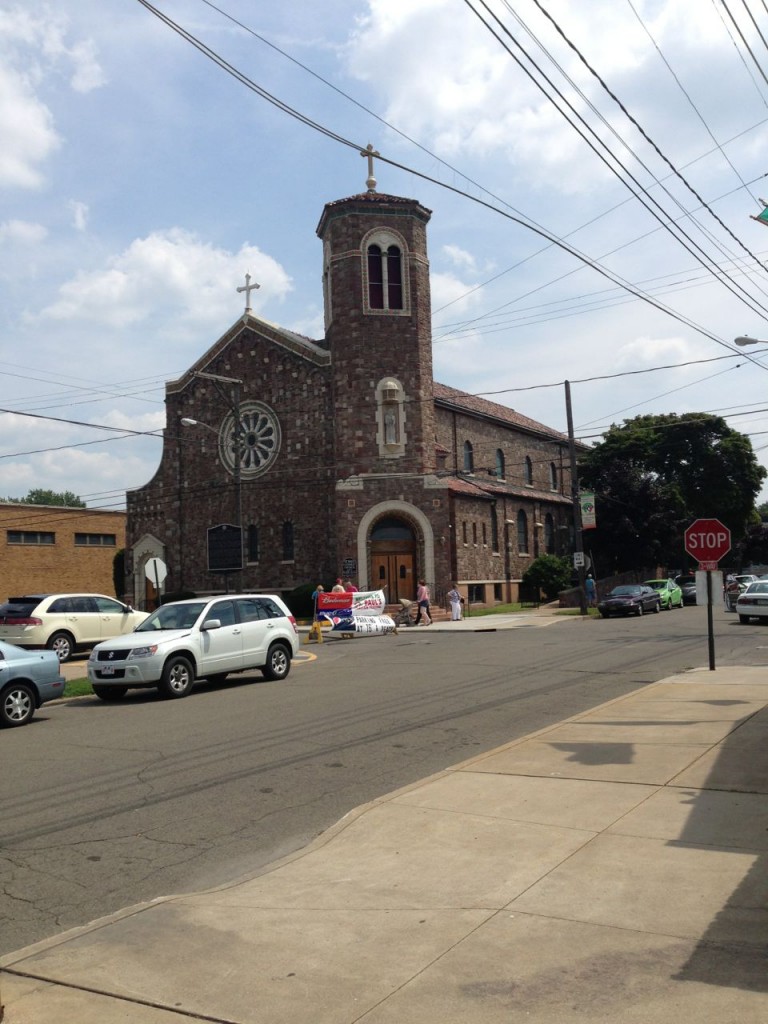
Every August, the St. Paul Roman Catholic Church holds its three-day Italian festival celebrating the Feast of the Assumption. St. Paul’s is located in Erie’s historic Little Italy and is the parish my in-laws grew up and were married in. We’ve gone to the festival in the past but have never attended the Mass and procession through the streets of Little Italy.
Feeling nostalgic for the processions we participated in during our Italy visit a few years ago, we decided to immerse ourselves in the experience this year. And I’m happy to say we enjoyed the Erie procession just as much as those we attended in Italy.
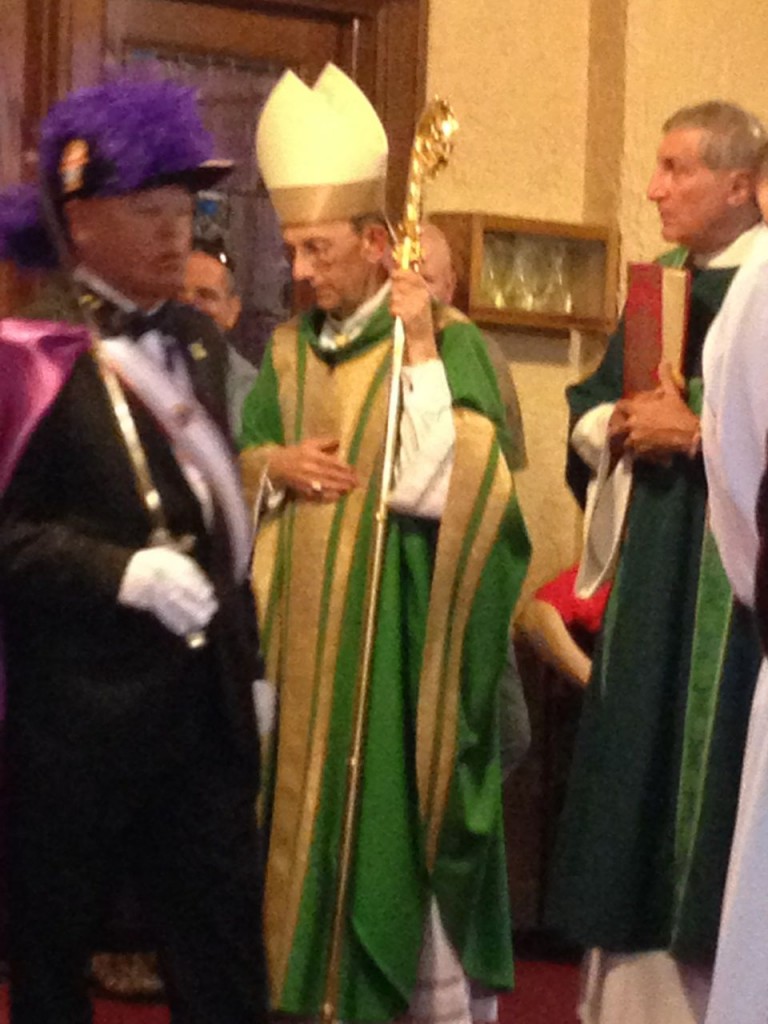
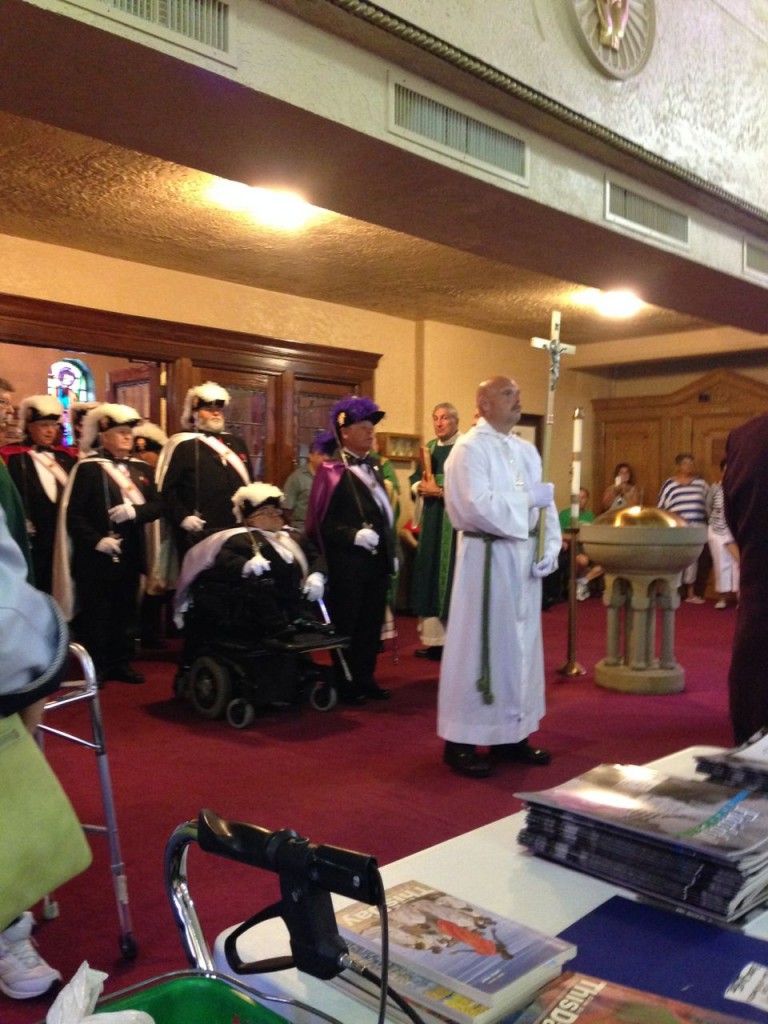
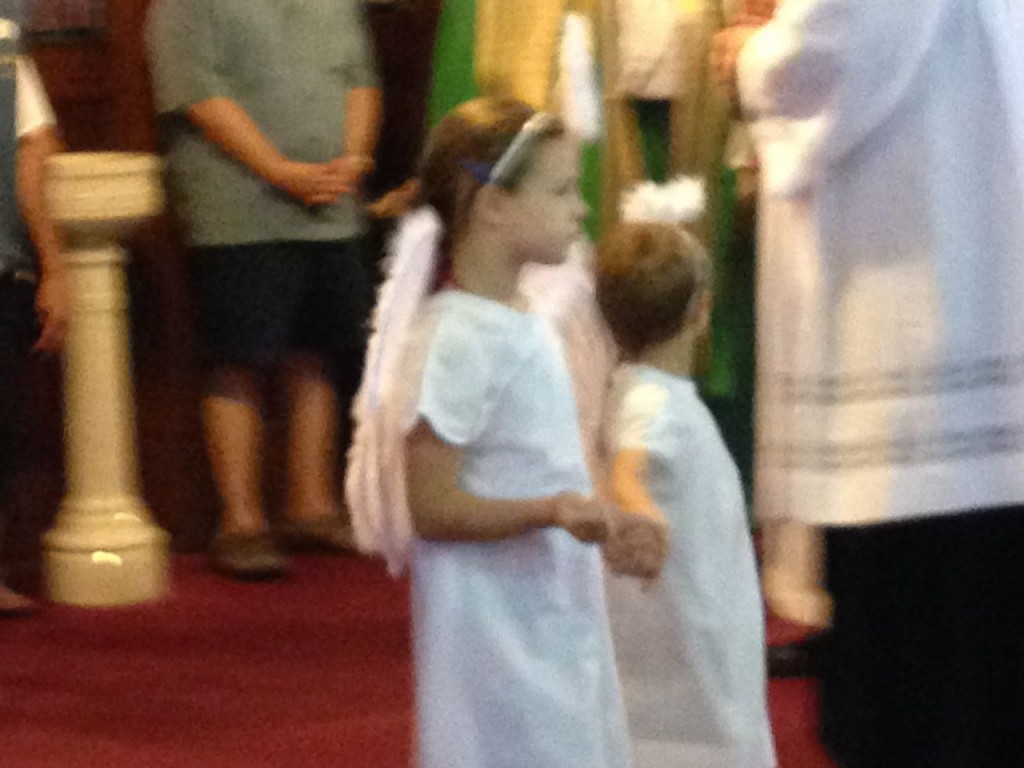
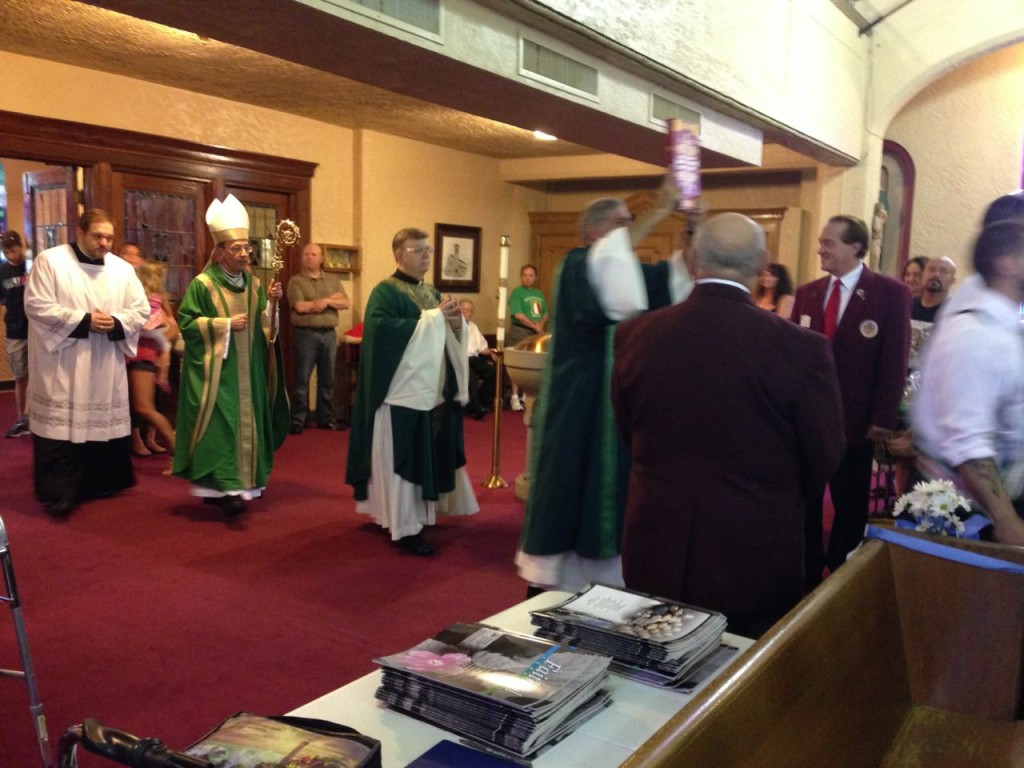
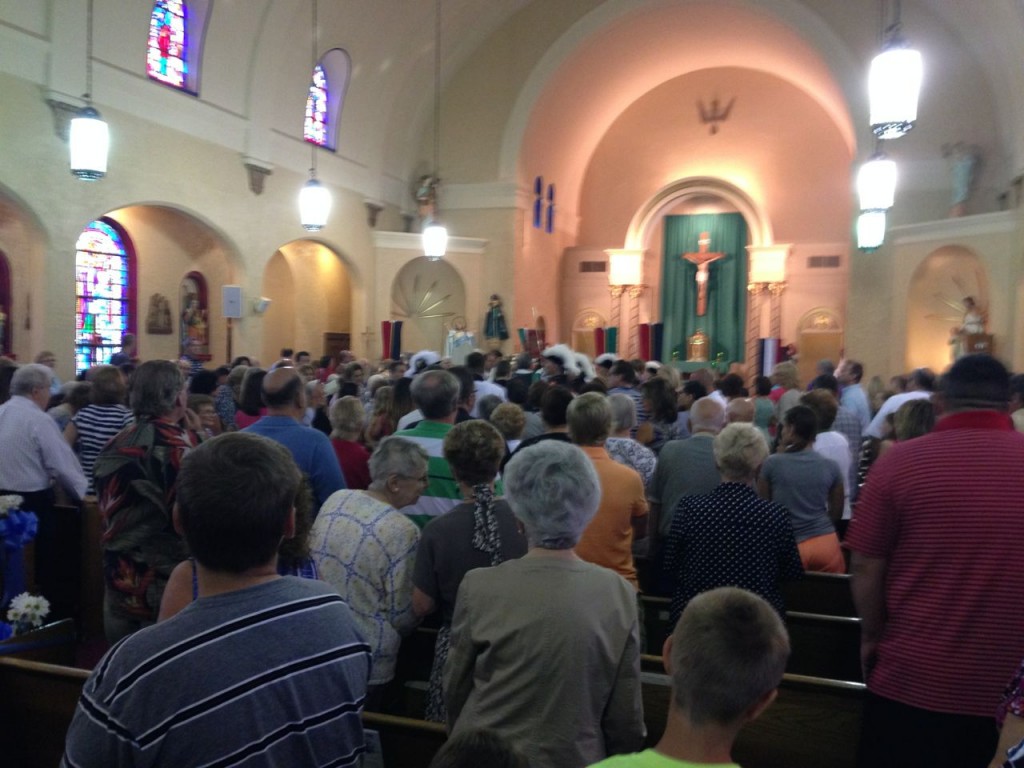
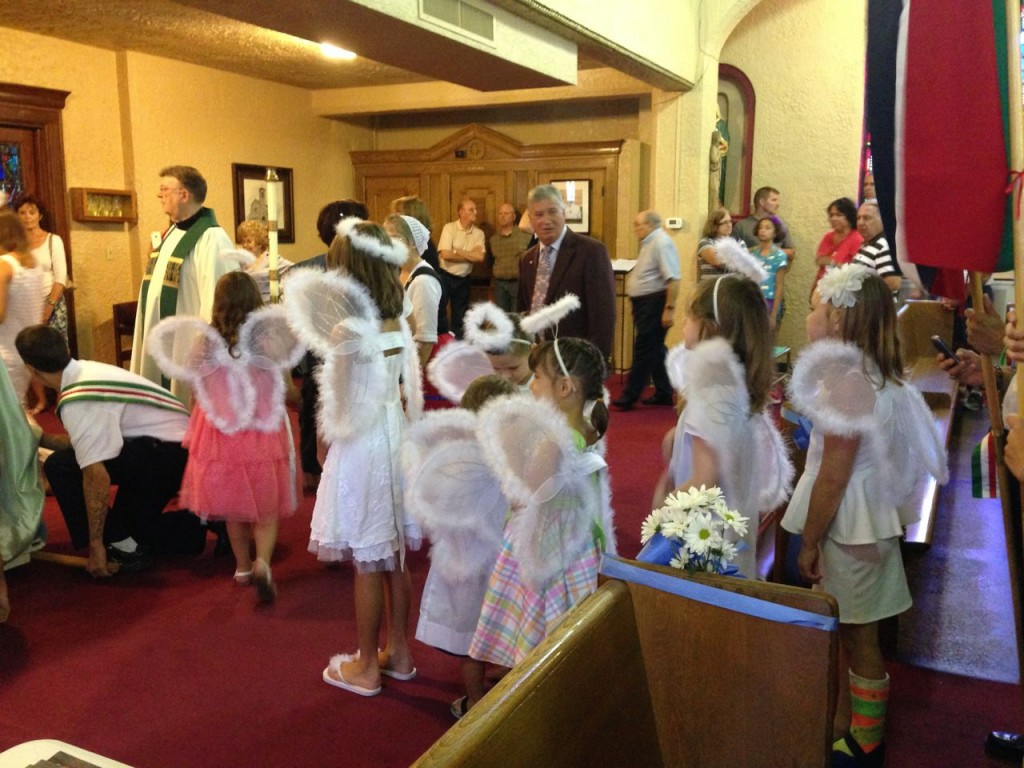
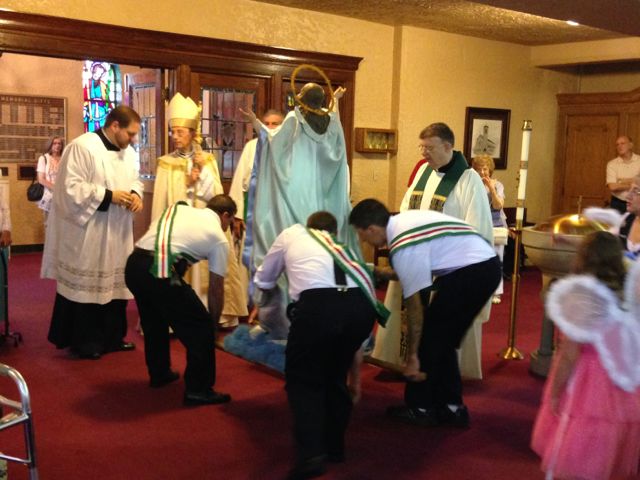
The day started out with Mass at 11:00 a.m., and we were just late enough that we sat in the back row, which gave us a good view of the preparations for the processional part of the Mass. The Bishop of the Diocese of Erie, Most Rev. Lawrence Persico, was there along with little children dressed as angels, the Knights of Columbus, and other groups. The choir sang in Italian in addition to a providing very capable rendition of Ave Maria, which started off the mood for the ceremony.
My favorite part of the Mass was when the Bishop said that today is a day when everyone is either Italian or wants to be Italian. I’m proud to say that after so many years of thinking I was a member of the latter category, the Ancestry.com DNA test I took a few months ago revealed that I am actually 11% Italian. There must have been some intermarrying going on between Italy and England or Italy and Germany way back in the family tree. But I’m very happy to say I’m actually part Italian now.
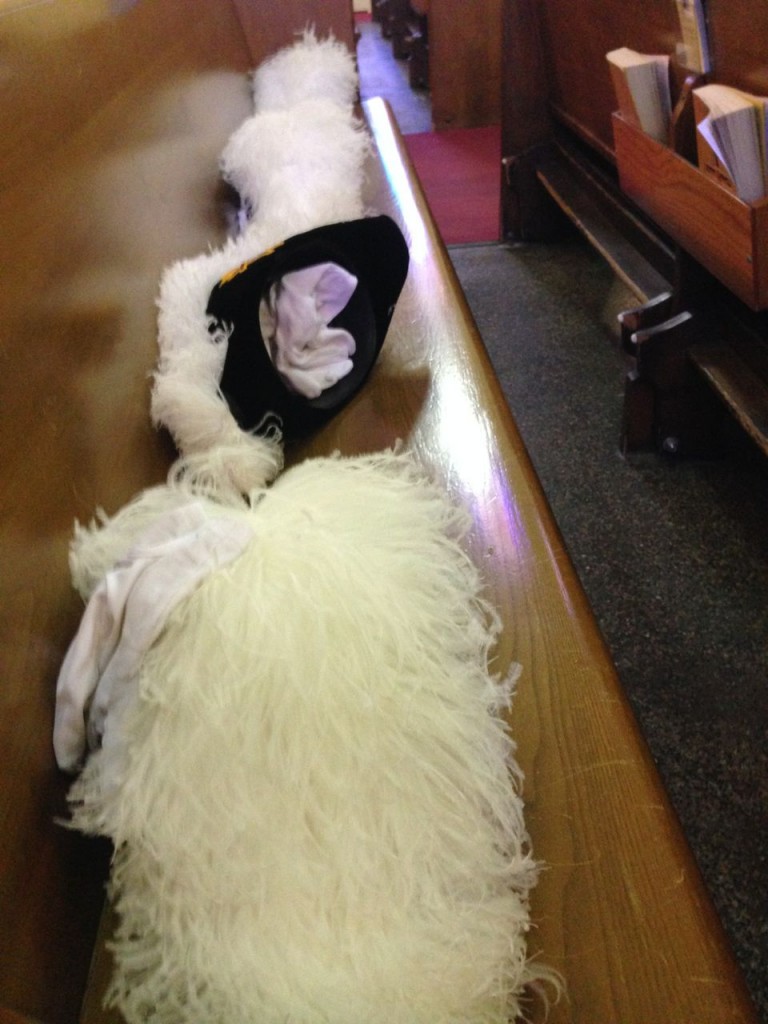
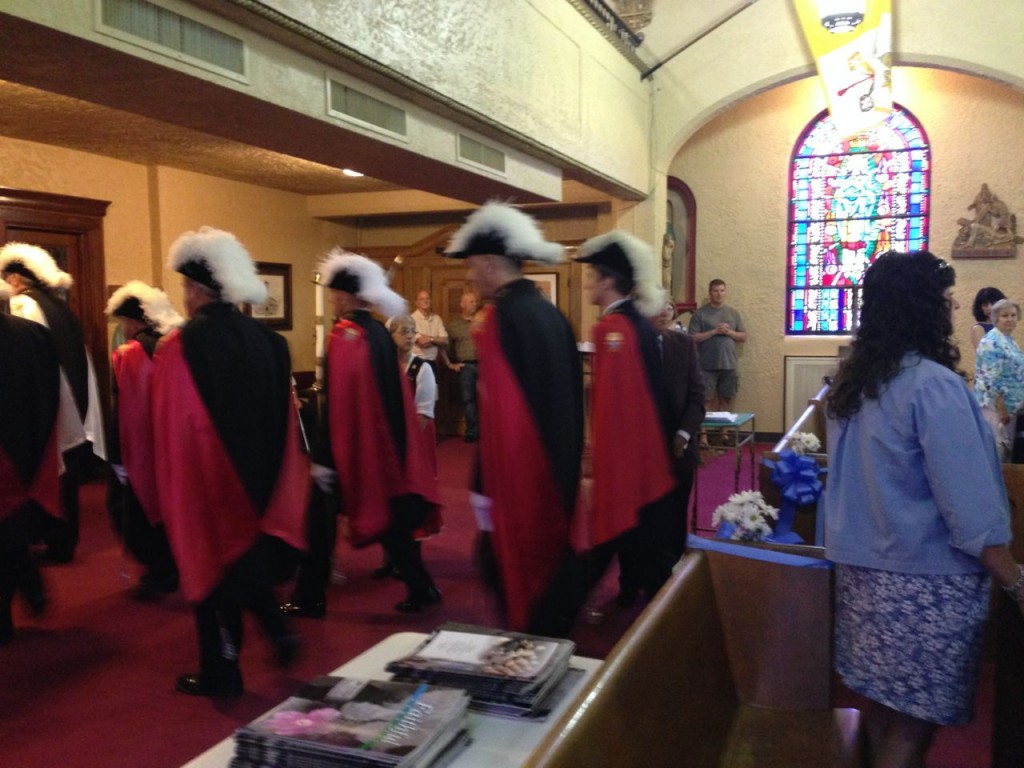
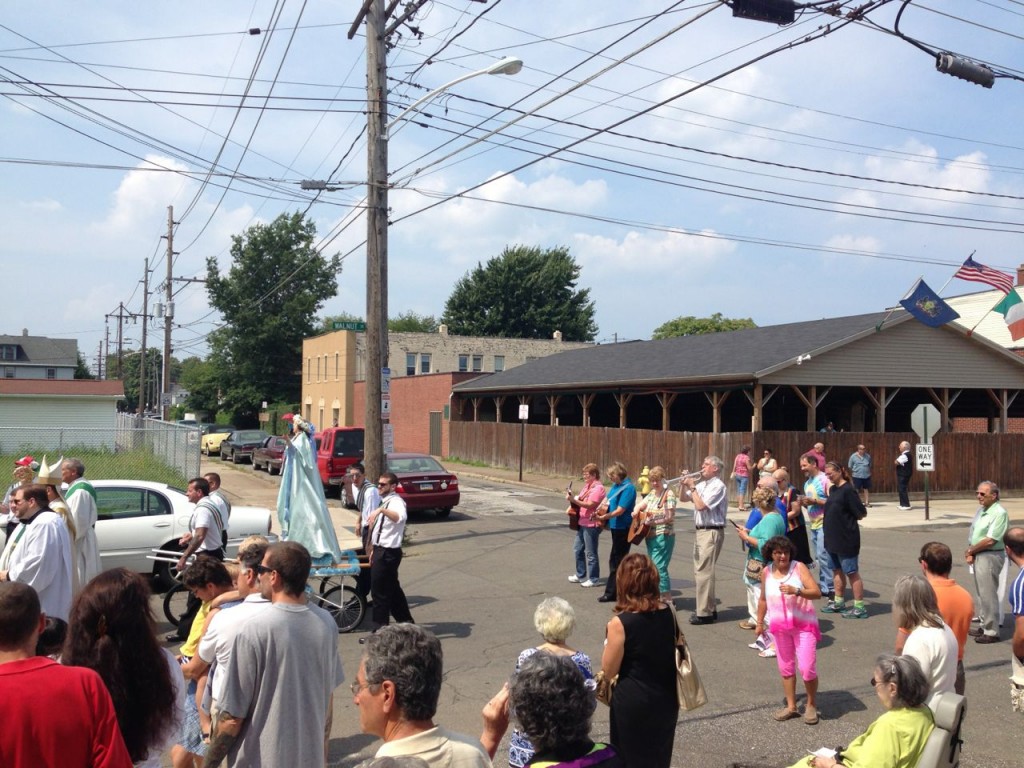
After Mass, it was time for the various groups to recess out of the church. The Knights of Columbus raised their swords to make a channel for the Bishop and priests to walk through. The young men picked a litter containing a large statue of Mary, the guitar and trumpet players took their places, and everyone assembled on the corner of 16th & Walnut.
I wondered what it would be like processing through Little Italy, which is undergoing a restoration, and contains many ethnicities and faiths. I wondered how this patchwork of races and creeds would react as we passed through their streets, singing “Salve Regina.” (If you’re not Catholic, you may recognize the Sister Act version). I didn’t need to worry at all. Many people came out on their porches to watch us pass by, and everyone was respectful, even a porch full of teenagers.
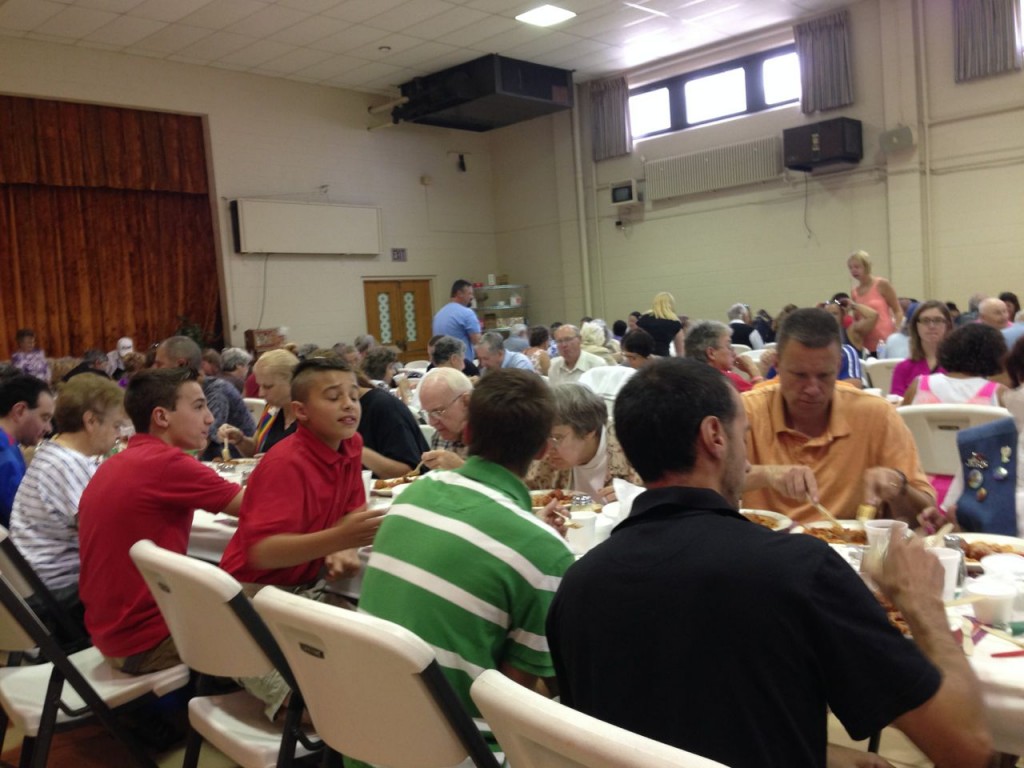
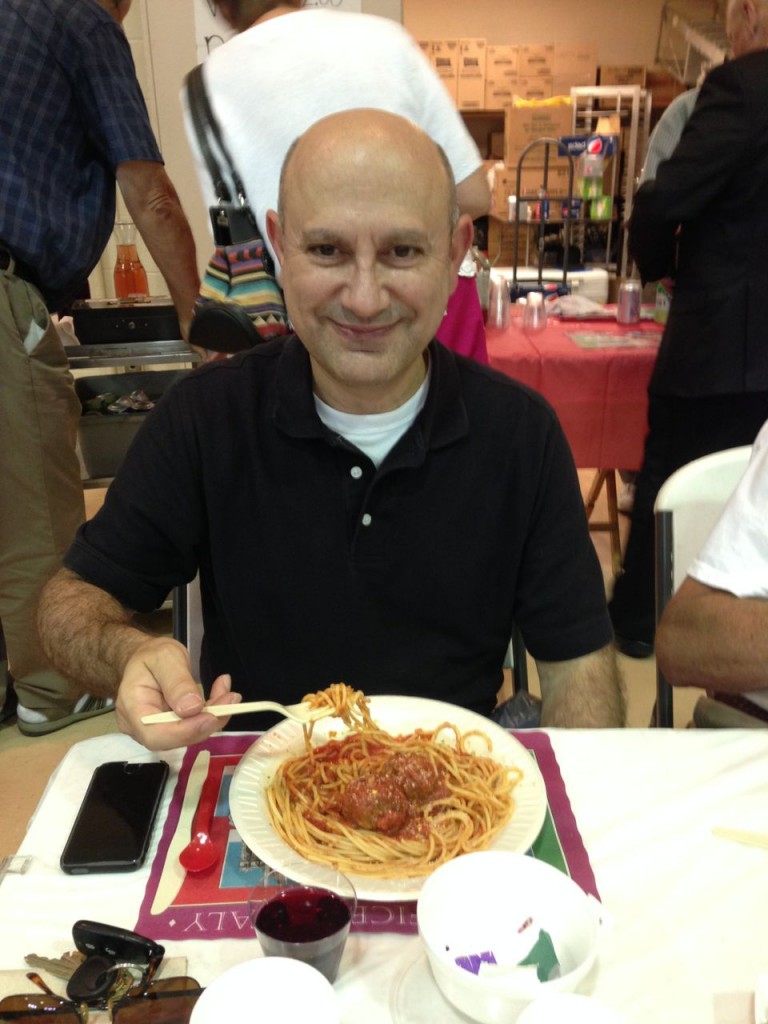
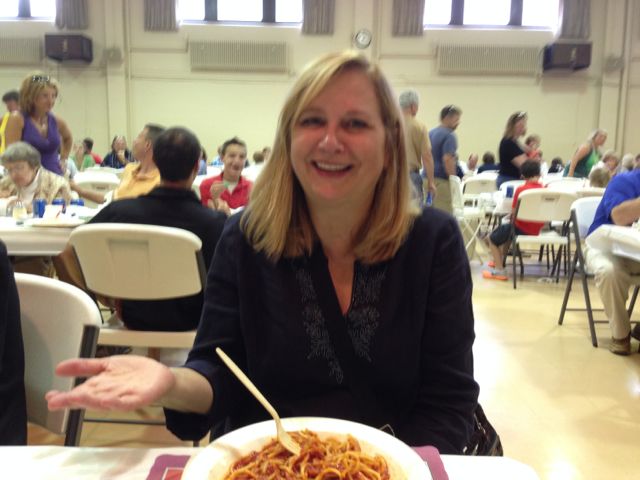
After the procession, it was time for the spaghetti dinner. How could we not have partaken after smelling the savory sauce that had been simmering for the past 12 hours? For $8, (children $4) diners received a small salad, plenty of Italian bread, and a generous portion of spaghetti with two respectably sized meatballs. Wine was available for $2 and soda for $1 in addition to the offered coffee or water. Dessert was a cup of vanilla ice cream. Needless to say, that was our dinner for the day. No need for me to cook that night.
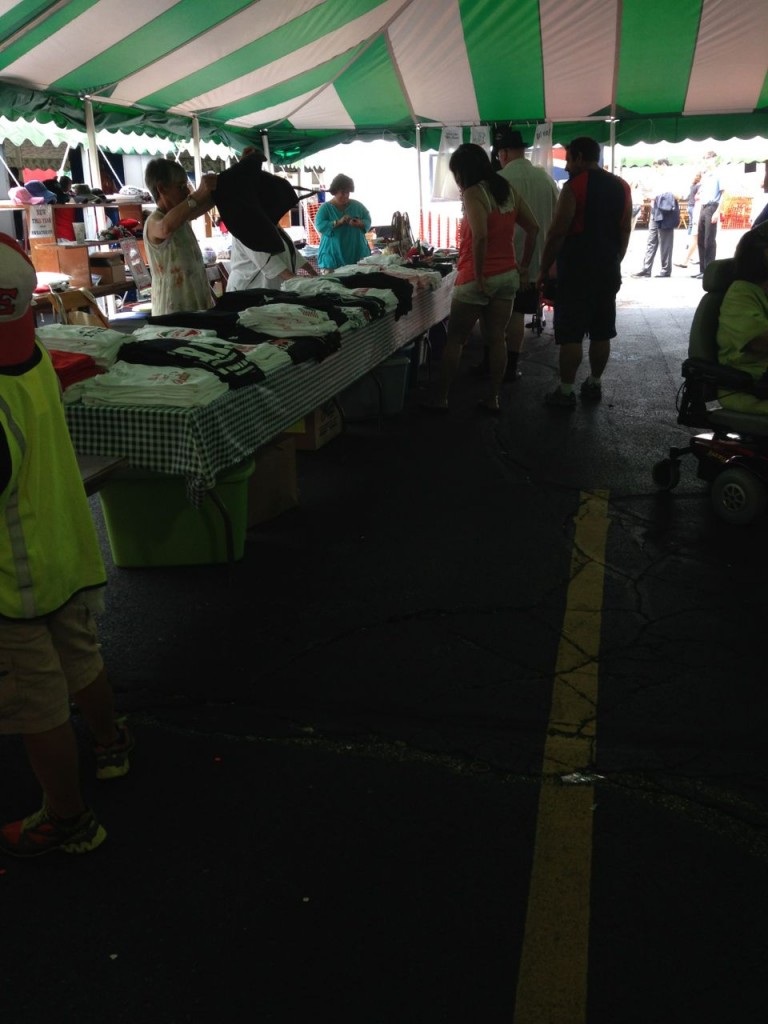
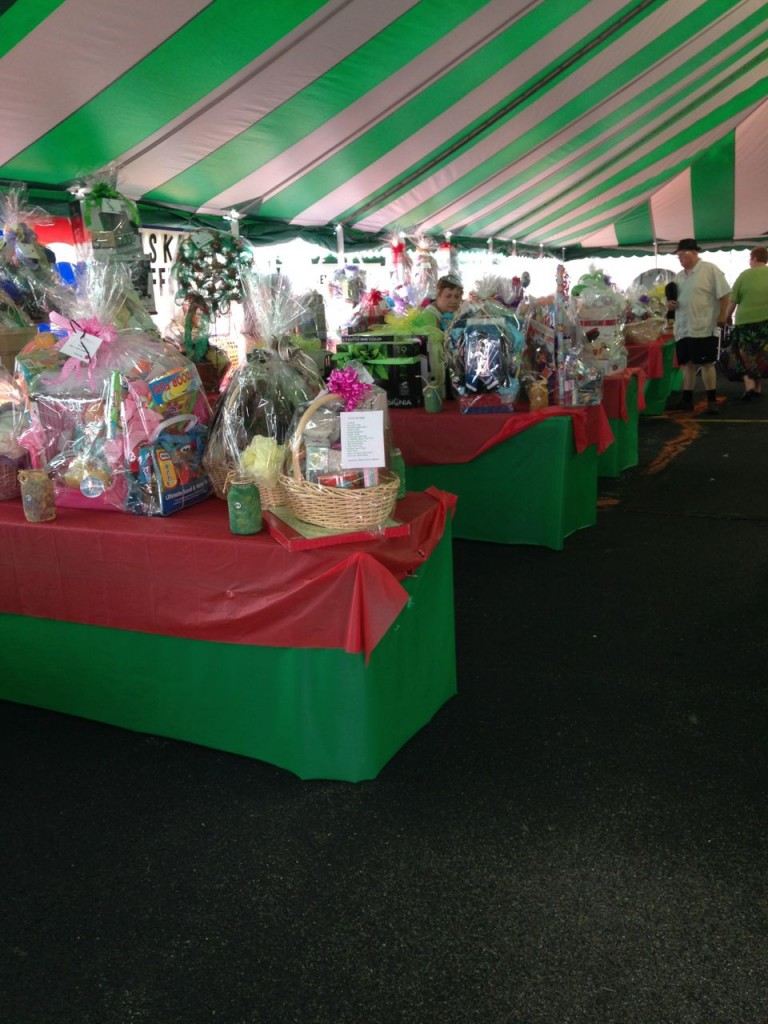
Outside under the tents, there were bingo, gambling games, children’s activities, and more food, including pizza, meatball subs, and desserts galore. We might have decided to cool down with a bottle of Peroni beer or a nice cup of gelato, too. And what would a festival be without raffles? We could take a chance on a nice mountain bike or on any of 70 baskets, each worth around $100. If we were in the mood for shopping, we could buy a snazzy, “Kiss me I’m Italian” T-shirt or head over to the boutique that was filled with gently worn purses, scarves, and jewelry all donated to the festival. Jim was in the mood for shopping and bought a nice, blue T-shirt that says “Italia” on the front.
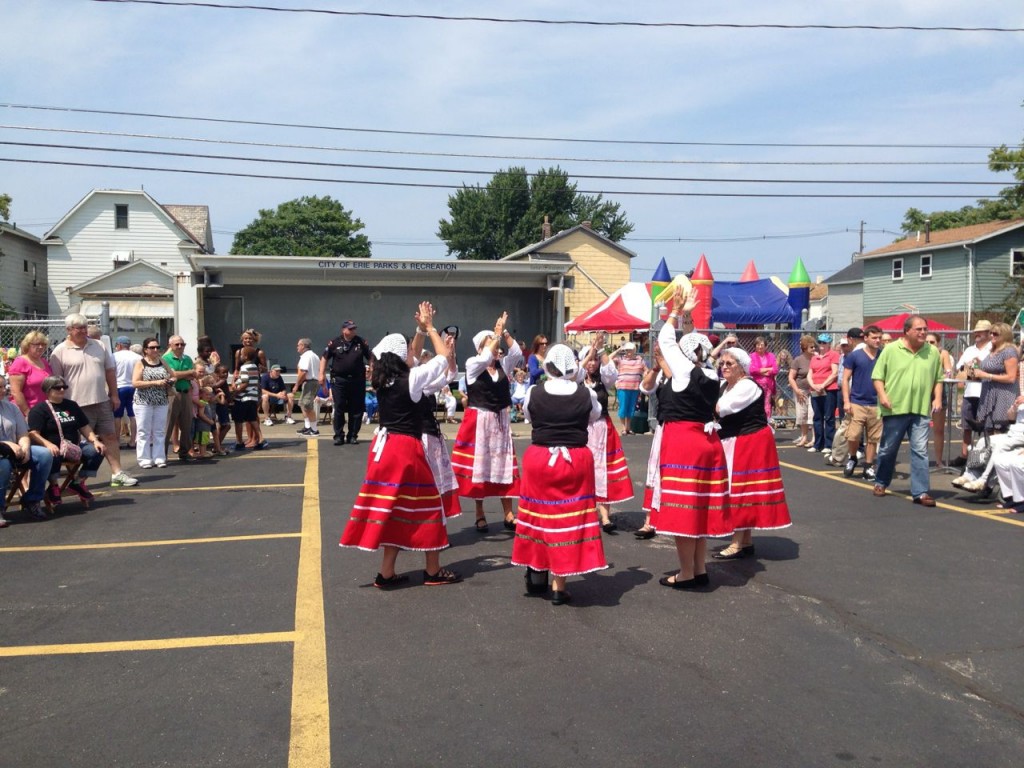
There was plenty of entertainment at St. Paul’s festival, too. Brightly dressed in red and green, the Italian Dancers of Erie made us think of the many years of Italian heritage represented by the festival. And musical acts, such as Cugini Italiani (Italian cousins), Gli Italiani, and Ruby Port took the stage.
Oh, and what’s a church festival without a car raffle? I almost forgot to mention the grand prize, a 2014 Fiat 500L.
Unfortunately, the festival 2014 is now over, but mark your calendars for the 2015 St. Paul’s Italian festival. After all, during the festival everyone’s Italian—or wants to be Italian, you know.
Say gang, check out the festival photos below. They were all taken with an iPhone, so they’re not bad, but they’re not award-worthy. In any case, you’ll get the picture, yes?
Ciao!








Transcription of Little Italy sign:
THIS MARKER IS DEDICATED TO OUR ITALIAN ANCESTORS WHO IMMIGRATED TO EIRE FROM ALL REGIONS OF ITALY AND ESTABLISHED LITTLE ITALY. THE FIRST ITALIANS SETTLED IN ERIE AROUND 1864. IN 1895, THERE WERE FOUR ITALIAN SETTLEMENTS IN ERIE, AND LITTLE ITALY WAS THE LARGEST OF THEM. THESE IMMIGRANTS SETTLED ON WEST 16TH STREET BETWEEN CHERRY AND POPLAR STREETS AND THE CORNER OF WEST 16TH & WALNUT STREETS.
TWO RAILROADS FORMED THE EARLY BOUNDARIES OF LITTLE ITALY. THE NICKEL PLATE RAILROAD ON WEST 19TH STREET FORMED THE SOUTHERN BOUNDARY, AND THE NEW YORK CENTRAL FORMED THE NORTHERN BOUNDARY ALONG WEST 13TH AND WEST 14TH STREETS. BY 1911, LITTLE ITALY’S POPULATION GREW TO 3,000 RESIDENTS AND INCLUDED NINE CITY BLOCKS FROM HURON STREET TO 17TH STREET, AND FROM CHESTNUT STREET TO POPLAR STREET.
IN MAY 1891, DURING A GATHERING AT A LOCAL FRUIT STORE, THE PLANS FOR THE FIRST ITALIAN CHURCH WERE FORMULATED. FROM THIS HUMBLE BEGINNING EMERGED ST. PAUL ROMAN CATHOLIC CHURCH. MONEY WAS RAISED TO PURCHASE THE OLD PRESBYTERIAN CHURCH AT 17 AND CHESTNUT STREETS. THE BUILDING WAS RELOCATED TO THE SITE OF THE PRESENT RECTORY ON WALNUT STREET BETWEEN 16TH AND 17TH STREETS. IN 1928, CONSTRUCTION BEGAN ON THE CHURCH AT ITS PRESENT LOCATION. IT WAS DEDICATED IN 1935.
DURING ITS ZENITH, LITTLE ITALY SUPPORTED TWO BANKS; THE BANK OF ITALY AND THE ITALIAN-AMERICAN BANK, FLOURISHING NEWSPAPERS LA PROGRESSO, LA FIAMMA AND LATER, LA CHITARRA. PROMINENT ITALIAN DOCTORS FOUNDED THE ROSE MEMORIAL HOSPITAL. THERE WERE MANY FRATERNAL SOCIAL ORGANIZATIONS FORMED. THE MOST PROMINENT WERE LA NUOVA AURORA SOCIETY AND THE CALABRESE CLUB.
THE SPONSOR OF THIS HISTORICAL MARKER: THE GIUSEPPE MAZZINI CIVIC ASSOCIATION
